Carnivores Pachydermata Ongulates Reptiles Primates, rodents and others Birds Birds of prey Terrestrial birds Waders and water birds
Curlew Sandpiper


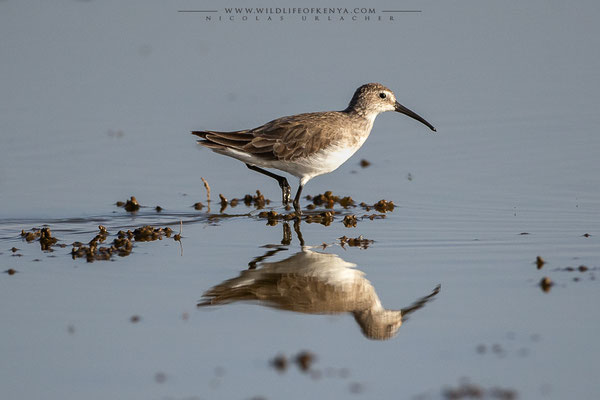

The Curlew Sandpiper (Calidris ferruginea) is a small, 18–23 cm migratory shorebird known for its long, down-curved bill and distinct, brilliant brick-red breeding plumage. They breed in the Arctic Siberian tundra and migrate up to 15,000 km to wintering grounds in Africa, Asia, and Australia, often traveling in large, gregarious flocks.
Key Facts About Curlew Sandpipers:
Appearance & Identification: They have a black, down-curved bill, black legs, and a noticeable white rump in flight. In summer, they are brick-red. In non-breeding plumage (seen in Australia/Africa), they are grey-brown above and white below.
Migration & Habitat: They undertake massive migrations from Siberian breeding grounds to coastlines, mudflats, and wetlands across the southern hemisphere.
Diet: These birds use their long, curved bills to probe for small invertebrates, insects, larvae, snails, and worms in mud or shallow water.
Breeding: They nest in the Siberian Arctic, typically laying four olive-green, speckled eggs in a scrape on the ground.
Conservation Status: The species is listed as Vulnerable globally and is decreasing, with populations potentially declining by 30-49% over the past three generations due to habitat loss and climate change. In Australia, they are listed as Critically Endangered.
Behavior: They are highly gregarious, often forming large, mixed-species flocks with other waders, such as Dunlins.