
Carnivores Pachydermata Ongulates Reptiles Primates, rodents and others Birds Birds of prey Terrestrial birds Waders and water birds
Tambourine Dove

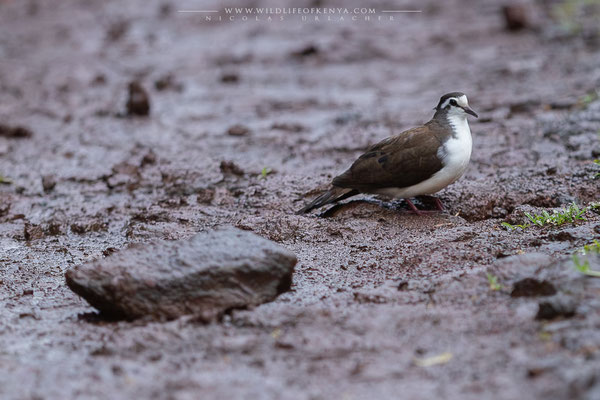

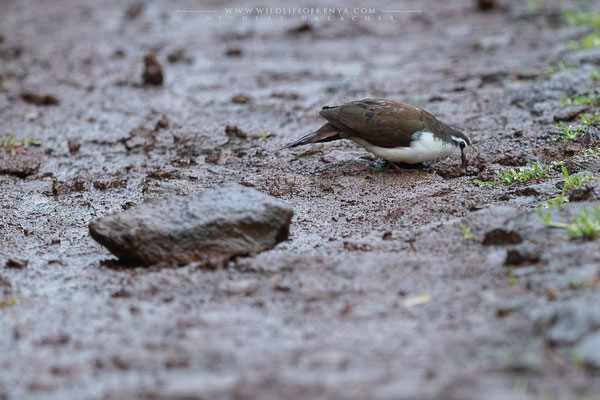
The Tambourine Dove (Turtur tympanistria) is a small, primarily ground-dwelling bird native to sub-Saharan African forests, named for its fast, rhythmic "du-du-du-du-du" call that sounds like a drum. Males have distinctive white faces and underparts with dark purple shoulder spots. They are usually solitary or in pairs, feeding on seeds and fruits.
Key Facts About the Tambourine Dove:
Appearance: They are small (approx. 22 cm) with grey-brown backs. Males have bright white foreheads and underparts, while females have a duller brownish-grey head and breast.
Habitat: They inhabit forests, thickets, and coastal scrub, preferring dense, wooded areas in sub-Saharan Africa.
Behavior: They are shy and often heard more than seen, walking on the forest floor, but are very fast and agile when flushed.
Diet: They eat small seeds, fruits (especially castor oil plant seeds), and occasionally insects.
Reproduction: Pairs are generally monogamous. They lay 1–2 cream-colored eggs in a nest built in trees or shrubs.
Flight: Characterized by fast, low, direct flight showing chestnut-colored underwings.
Conservation Status: The species is not listed as threatened, but it is somewhat dependent on forests, which are declining in parts of its range.
