
Carnivores Pachydermata Ongulates Reptiles Primates, rodents and others Birds Birds of prey Terrestrial birds Waders and water birds
Striped Kingfisher


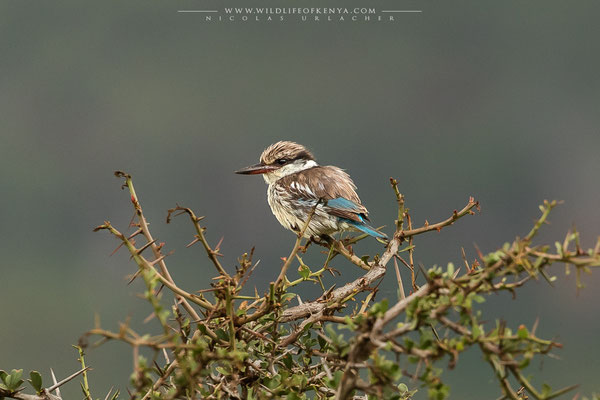
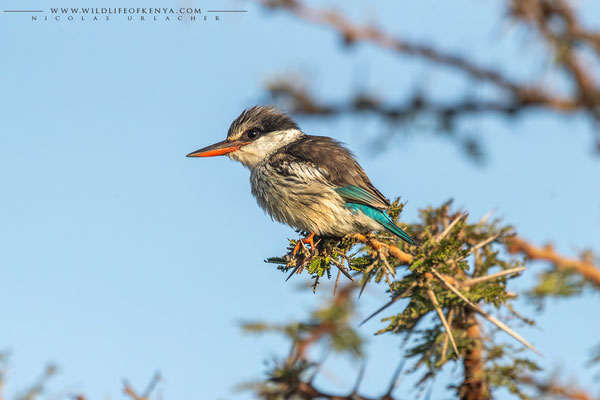

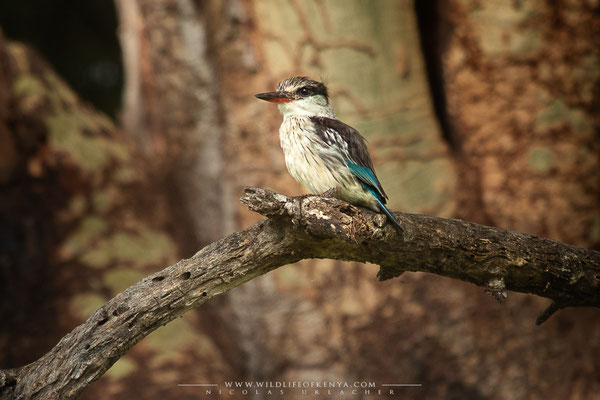
The Striped Kingfisher (Halcyon chelicuti) is a small, 16–18 cm, non-aquatic tree kingfisher widespread across Sub-Saharan African woodlands and savanna. Known for its loud, whistling call, it is highly territorial, feeding primarily on grasshoppers, insects, and small reptiles. The species is recognized as Least Concern by the IUCN.
Key Facts About the Striped Kingfisher:
Appearance: Features a grey-brown head with dark streaks, white underparts, and a distinct black-and-white striped collar. The upper tail and wing feathers are bright metallic blue, which is more visible during flight.
Diet & Hunting: Primarily insectivorous, consuming grasshoppers, beetles, and locusts. It also hunts small rodents, lizards, and snakes.
Hunting Behavior: They hunt from a perch, often 3 meters high, and can swoop down on prey up to 10 times per minute.
Habitat: Prefers dry savannah, thorny scrubland, and wooded areas, avoiding dense forests.
Breeding & Nesting: Nests in tree cavities, often using old woodpecker or barbet holes. Both parents take care of the young.
Territoriality: They are aggressive defenders of their territory, which can span up to 3 hectares.
Voice: Known for a loud, shrill, whistling "teeep-tiiii-rrrrrrr" call, often delivered from high branches.
Range: Found across Sub-Saharan Africa, from Senegal to Ethiopia and south to South Africa.
They are non-migratory but may move in response to rainfall
