
Carnivores Pachydermata Ongulates Reptiles Primates, rodents and others Birds Birds of prey Terrestrial birds Waders and water birds
Three-banded Plover


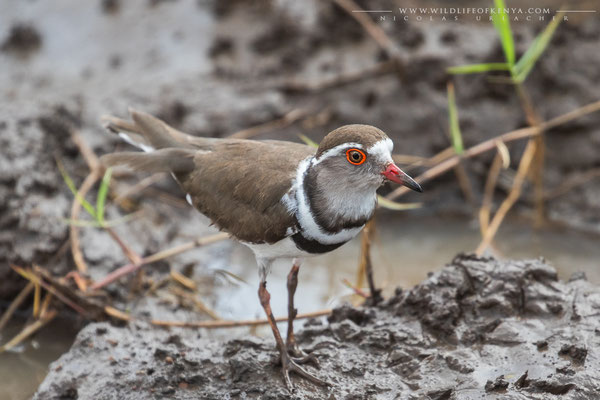
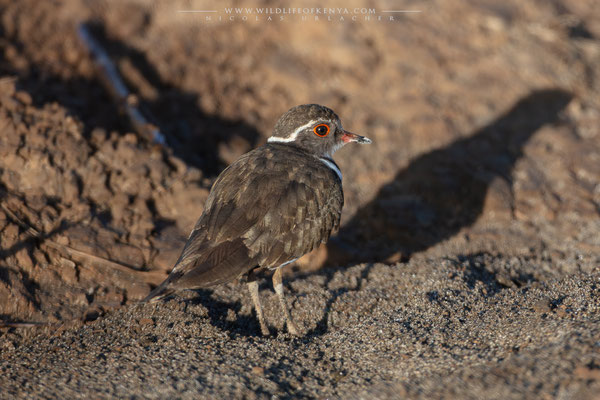



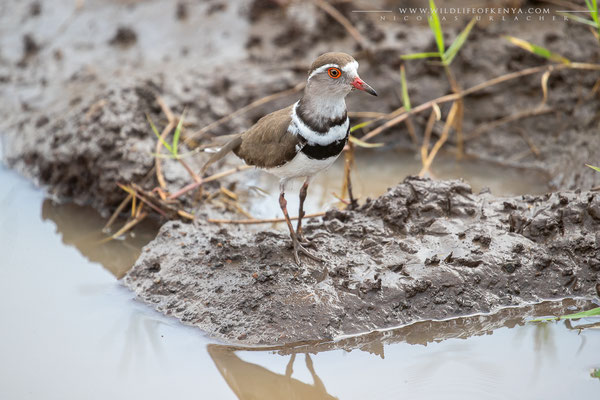
The African Three-banded Plover (Charadrius tricollaris) is a small, 18 cm wading bird, readily identified by two distinct black breast bands separated by white, a red eye ring, and a red-based black bill. Found across eastern and southern Africa near inland waterways, this monogamous, often sedentary bird feeds on insects and small invertebrates, sometimes breeding twice in one season.
Key Facts About the African Three-banded Plover:
Appearance: They have medium brown upperparts, a white forehead and underparts, and a unique, dark, multi-banded chest. Their head features a black crown and white supercilia that meet on the back of the neck.
Habitat: They prefer inland, freshwater habitats such as rivers, pools, and lakeshores, favoring areas with sand, mud, or gravel. They are less common on the coast.
Diet: As insectivores, they hunt by sight, eating terrestrial and aquatic insects, larvae, crustaceans, small molluscs, and worms.
Breeding: They are territorial, monogamous nesters, usually laying 1–3 eggs in a scrape on the ground. They can breed year-round, with a peak between July and December, and are known to be double-brooded.
Behavior: They are often seen alone or in pairs, but can form small flocks (sometimes up to 100 in winter). They are generally sedentary (do not migrate far), though some local movement occurs.
Call: Their call is a distinctive, high-pitched, whistled weeet-weet or a sharp kreet.
Conservation: Classified as a species of Least Concern due to their wide distribution and stable population.
These birds are often seen along muddy shores where they, like other plovers, display a "stop-run-peck" behavior while foraging.
