Carnivores Pachydermata Ongulates Reptiles Primates, rodents and others Birds Birds of prey Terrestrial birds Waders and water birds
African five-lined Skink


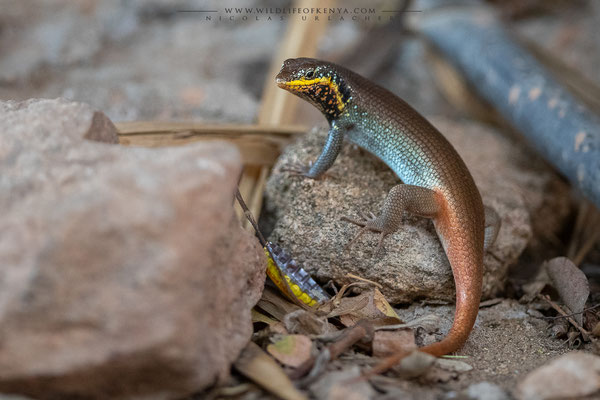

Trachylepis quinquetaeniata, commonly known as the African five-lined skink or rainbow mabuya, is a vibrant, 8-inch, diurnal lizard native to sub-Saharan African rocky habitats. Known for extreme sexual dimorphism—males are brown with yellow stripes and blue/silver spots, while juveniles/females have vivid electric-blue tails. They are omnivorous, rupicolous (rock-dwelling), and have established invasive populations in Florida.
Key Characteristics and Biology
Appearance: They have a sleek, cylindrical body with smooth, glossy scales. Males are often brown with yellow to orange stripes, while females and juveniles display five distinct white/golden stripes against a dark brown/black body.
Blue Tail: Juveniles and females possess a bright, electric-blue tail, which may help identify them to dominant males or divert predator attacks to the tail.
Size: They typically grow to about 20cm in length.
Diet: They are omnivores, feeding on insects (beetles, ants, crickets) and occasionally plant matter.
Behavior: These lizards are diurnal (active during the day), rupicolous (living on rocks), and often live in colonies.
Native Range: They are widespread in sub-Saharan Africa, including Kenya, Egypt, and Senegal.
Habitat: Primarily found in dry, rocky areas, savannas, and shrublands.
Invasive Species: Established populations exist in Florida (USA) and some in California, often found near human structures.
Reproduction: They are oviparous (egg-laying).
Predators: Subject to predation by larger reptiles, birds, and mammals.
Defense: Like many skinks, they can drop their tails to escape predators.