
Carnivores Pachydermata Ongulates Reptiles Primates, rodents and others Birds Birds of prey Terrestrial birds Waders and water birds
African Civet
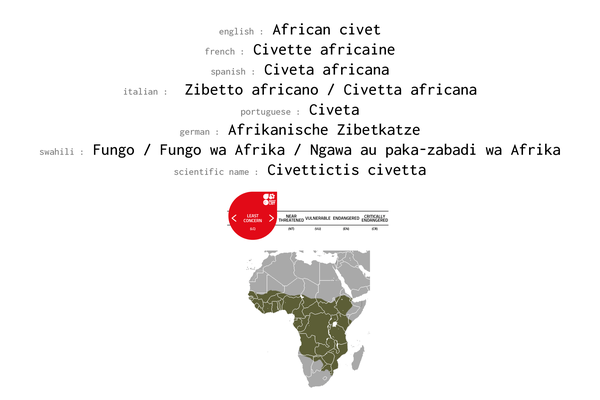
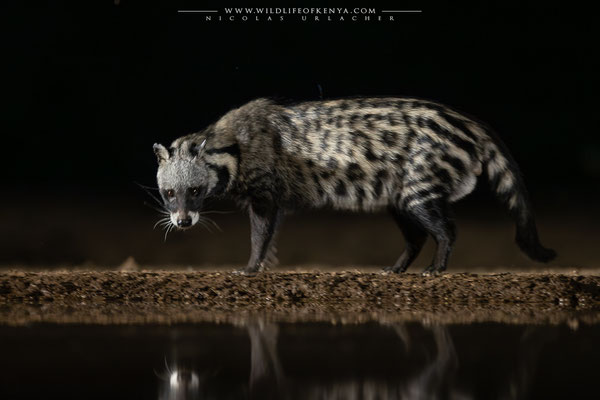

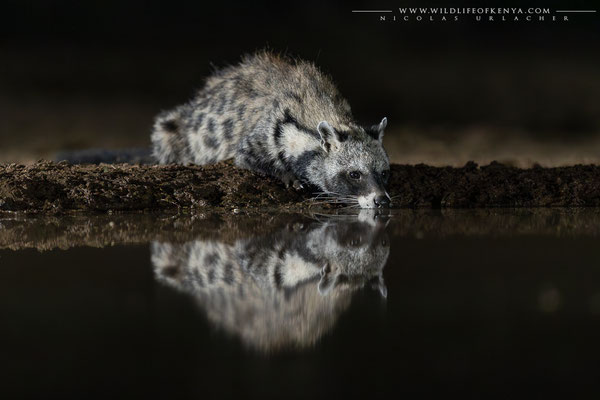

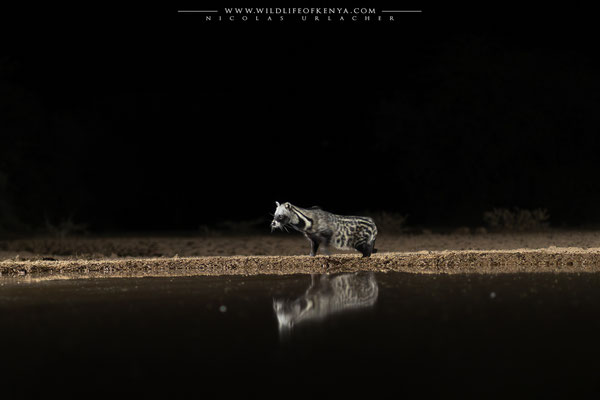
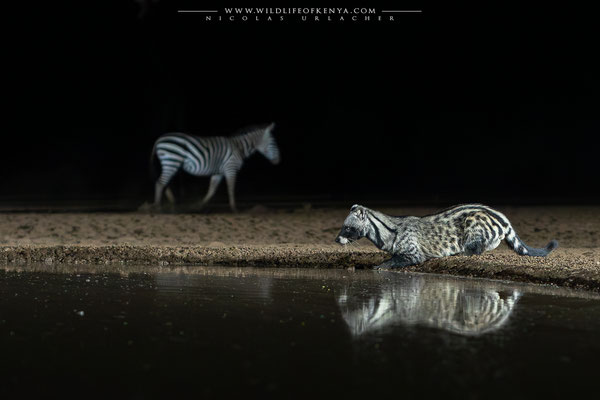
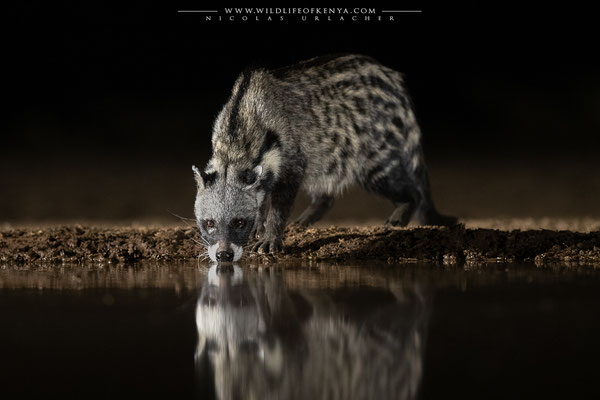
The African civet is a large viverrid native to sub-Saharan Africa, where it is considered common and widely distributed in woodlands and secondary forests. It has been listed as least concern on the IUCN Red List since 2008. In some countries, it is threatened by hunting, and wild-caught individuals are kept for producing civetone for the perfume industry.
The African civet is primarily nocturnal and spends the day sleeping in dense vegetation, but wakes up at sunset. It is a solitary mammal with a unique coloration: the black and white blotches covering its coarse pelage and rings on the tail are an effective cryptic pattern. The black bands surrounding its eyes closely resemble those of the raccoon. Other distinguishing features are its disproportionately large hindquarters and its erectile dorsal crest. It is an omnivorous generalist, preying on small vertebrates, invertebrates, eggs, carrion, and vegetable matter. It is one of the few carnivores capable of eating toxic invertebrates such as termites and millipedes.[4][5] It detects prey primarily by smell and sound rather than by sight. It is the only living member of the genus Civettictis.
African civets deposit their feces in large piles called latrines, or specifically "civetries". The latrines are characterized by fruits, seeds, exoskeletons of insect and millipede rings, and occasionally clumps of grass. Like felids, male African civets scent mark by spraying urine backwards.
African civets are typically solitary creatures. They use their perineal gland secretion to mark their territories around their civetries. These markings typically follow common routes and paths and lie within 100 meters of civetries 96.72% of the time.
If an African civet feels threatened, it raises its dorsal crest to make itself look larger and thus more formidable and dangerous to attack. This behavior is a predatory defense.
Source : Wikipedia
