
Carnivores Pachydermata Ongulates Reptiles Primates, rodents and others Birds Birds of prey Terrestrial birds Waders and water birds
Woodland Kingfisher
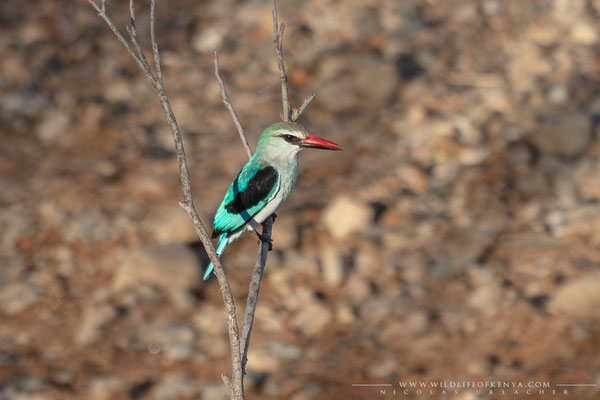
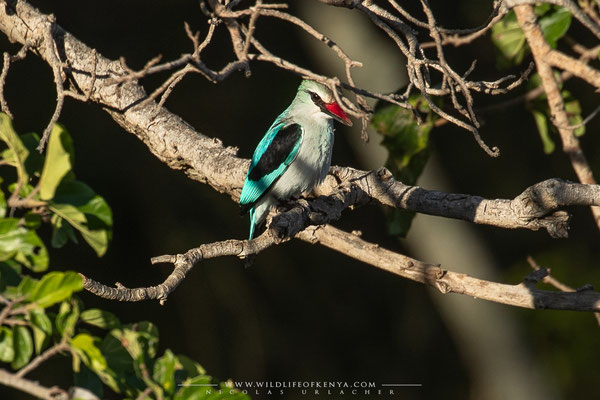
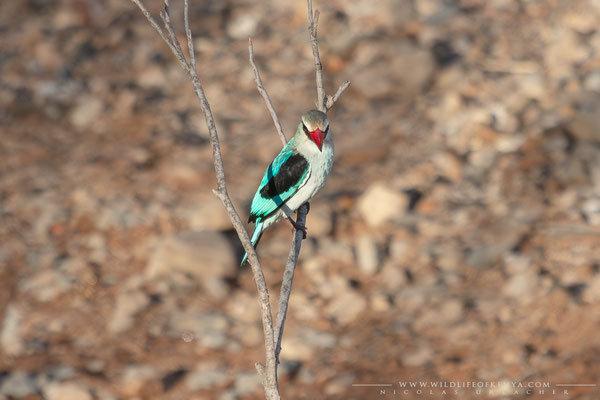
The Woodland Kingfisher (Halcyon senegalensis) is a medium-sized (20–23 cm),, bright blue and white arboreal bird widely distributed in Sub-Saharan Africa. Despite its name, it prefers dry, wooded habitats—especially Acacias—over water, feeding primarily on insects and small reptiles. It is known for being highly aggressive and vocal, with a bicolored red-and-black bill.
Key Facts About the Woodland Kingfisher:
Appearance: Distinctive bright blue back, wing panel, and tail, with a white head, neck, and underparts. The bill is large with a red upper mandible and black lower mandible, and they have a dark stripe through the eye.
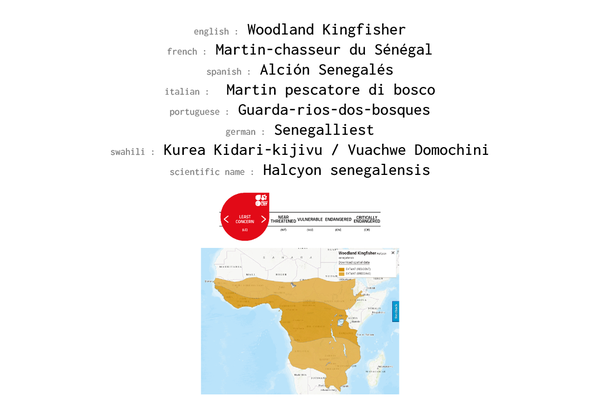
Habitat & Range: Widespread across tropical Africa south of the Sahara. They prefer wooded areas, savanna, and riverine forests, often far from water.
Diet: Primarily insectivorous (beetles, grasshoppers) but also eats small reptiles, frogs, and occasionally small fish. They hunt by diving from a perch.
Behavior & Call: Known for being highly territorial and aggressive, often attacking intruders, including humans. Their call is a loud, high-pitched "tuuui" followed by a trilling "trrrrrrrrrr," often compared to a nail running down the teeth of a comb.
Breeding: They nest in tree holes, often using abandoned cavities from barbets or woodpeckers. They typically lay three white eggs.
Migration: While some are resident near the equator, populations in northern and southern Africa are migratory, moving into the equatorial zone during the dry season.
Conservation Status: The Woodland Kingfisher is classified as Least Concern by the IUCN.
