
Carnivores Pachydermata Ongulates Reptiles Primates, rodents and others Birds Birds of prey Terrestrial birds Waders and water birds
African pygmy Kingfisher
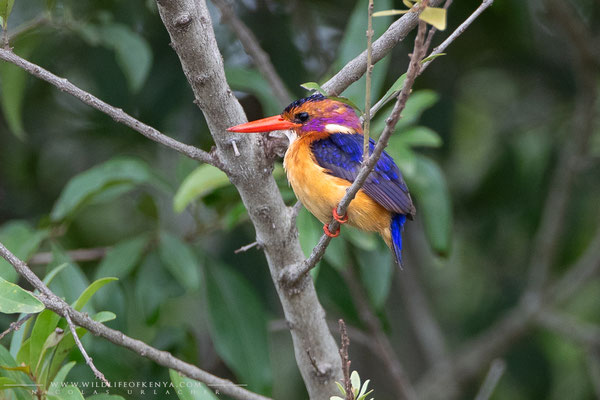
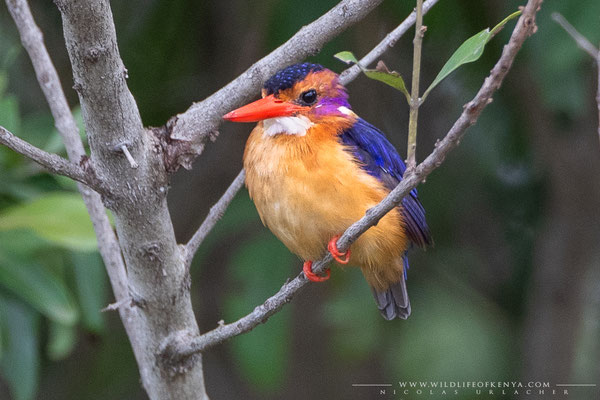

The African pygmy kingfisher (Ispidina picta) is a tiny (12 cm), brightly colored, insectivorous bird found throughout sub-Saharan African woodlands, savannas, and coastal forests. Unlike many kingfishers, they are not strictly tied to water, often hunting insects, spiders, and small lizards from low perches. They are migratory in parts of their range, often traveling at night.
Key Facts About the African Pygmy Kingfisher
Appearance & Identification: These birds are 12 cm long with vibrant plumage: a violet-blue back/crown, a rufous (orange) face and underparts, and a distinct purplish patch on the ears. They have bright red bills and legs. Juveniles are duller with black, rather than orange, bills.
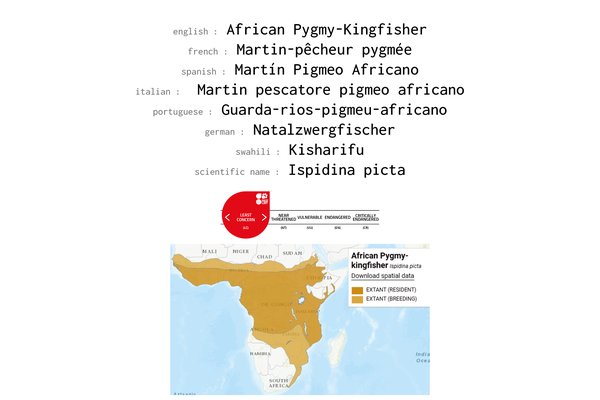
Habitat & Distribution: They are common in woodlands, thickets, and coastal forests across sub-Saharan Africa, often avoiding dense, arid, or very high-altitude areas.
Diet & Feeding: Primarily insectivores, they catch insects, spiders, crickets, mantids, and cockroaches. They also eat small vertebrates like lizards, geckos, and small frogs. They hunt by perching silently in the understory and darting down to catch prey on the ground.
Behavior: They are typically solitary or found in pairs. They are known to be secretive, sitting motionless for long periods. Their call is a high-pitched, insect-like "tsip-tsip" or "tsik," often heard in flight.
Breeding & Nesting: They are cavity nesters, excavating burrows about 40–50 cm long in earth banks, termite mounds, or sometimes in tree cavities.
Migration: Populations in southern Africa are known to migrate north to central Africa (DRC, Uganda, Kenya) for the winter, usually leaving in March/April and returning in September/October.
Conservation Status: They are listed as a species of "Least Concern" and are common in many areas, though habitat loss is a potential long-term threat.
They are often confused with the Malachite Kingfisher, but the pygmy kingfisher is smaller, lacks the large white throat patch, and prefers drier habitats.
