
Carnivores Pachydermata Ongulates Reptiles Primates, rodents and others Birds Birds of prey Terrestrial birds Waders and water birds
Grey-headed Kingfisher
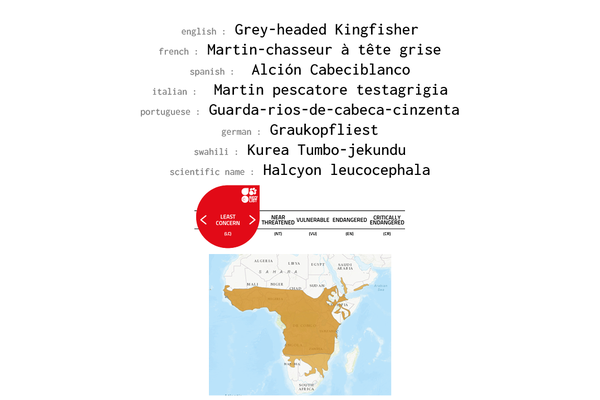
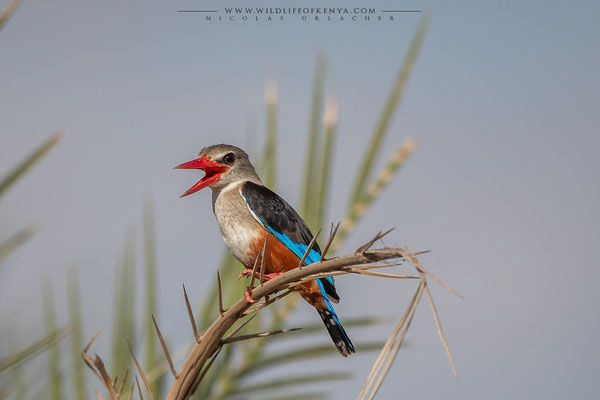

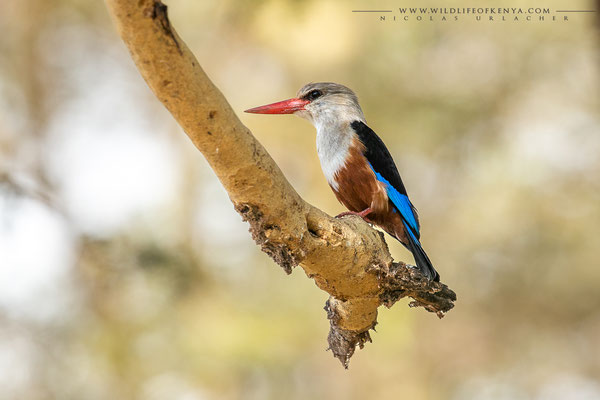
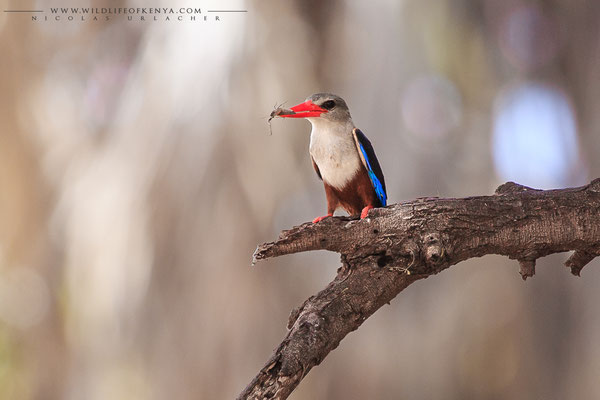
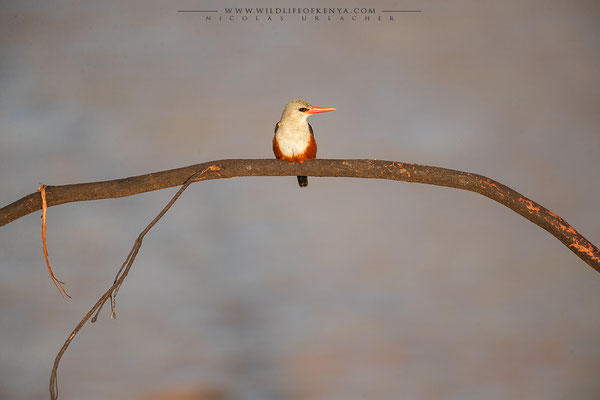
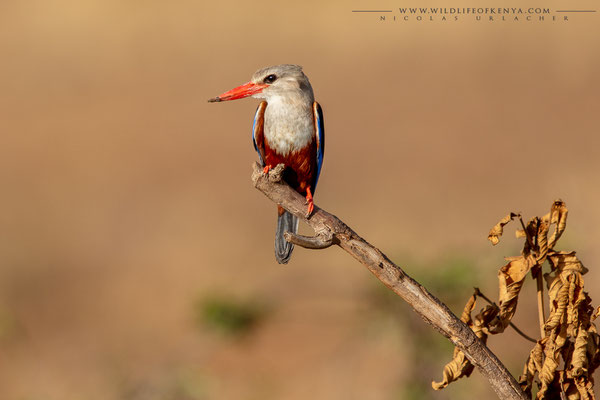

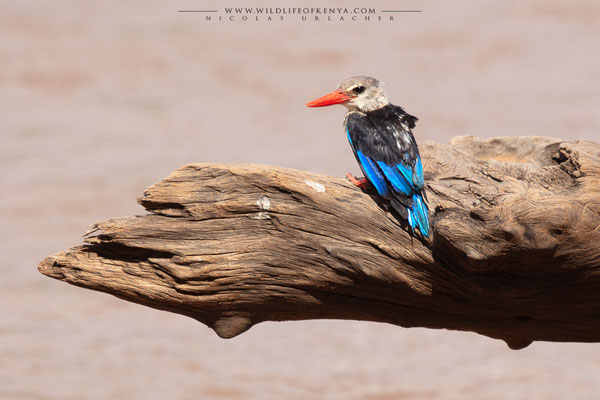
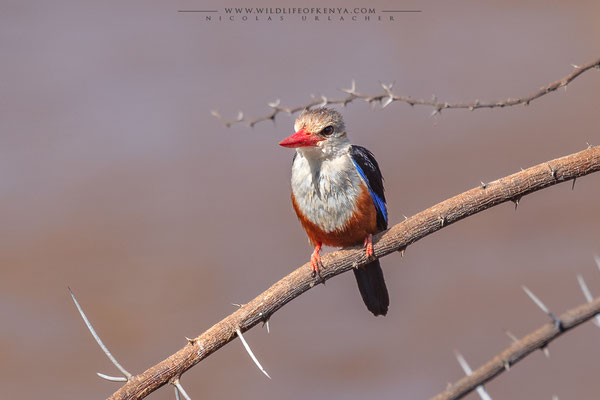
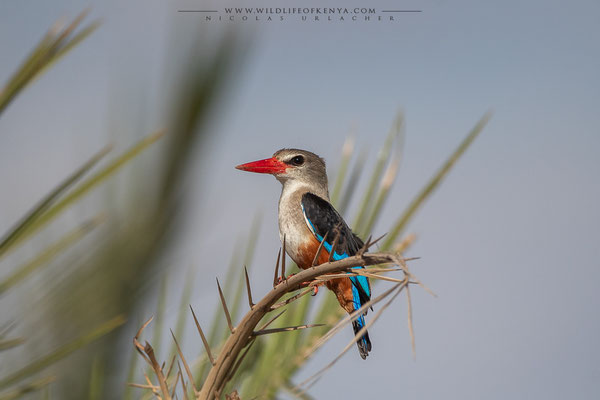
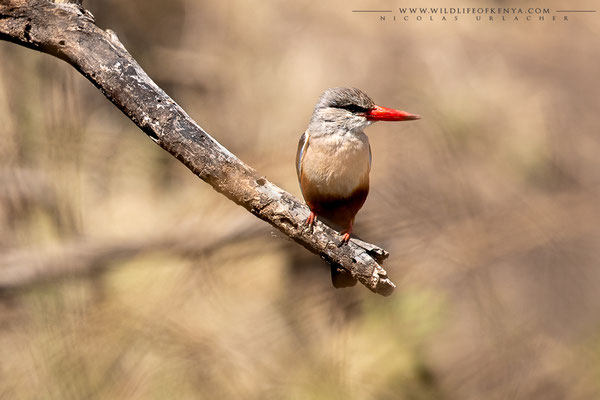

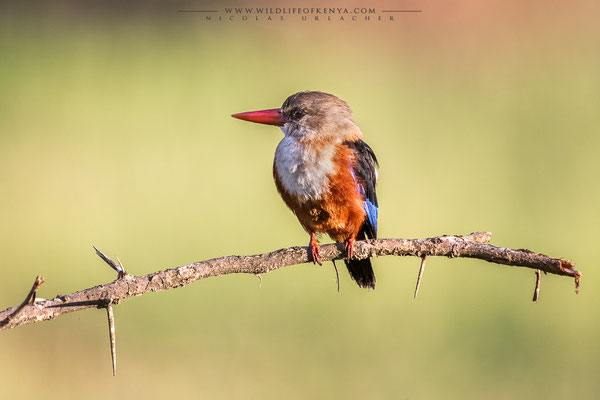
The Gray-headed Kingfisher (Halcyon leucocephala) is a striking, medium-sized bird (approx. 21-22cm) with a distinct pale grey head, bright blue wings/tail, chestnut belly, and a long red beak. Unlike many kingfishers, it is not aquatic, preferring dry woodlands and scrubs across Africa and Arabia to hunt insects and lizards.
Key Facts About the Gray-headed Kingfisher:
Appearance & Identification: They have a striking appearance with an ashy-gray head and breast, black back, sapphire blue wing covers, and deep chestnut-colored underparts. Males and females are similar in appearance, though females can be slightly duller.
Habitat & Range: They are found in sub-Saharan Africa, the Cape Verde Islands, and the Arabian Peninsula. They prefer dry woodland, savanna, and coastal scrub, and are often seen perched quietly on low branches.
Diet & Hunting: These birds are insectivorous and terrestrial hunters, primarily eating large insects like grasshoppers, as well as small reptiles. They use a "sit-and-wait" technique, bobbing their heads before diving from a perch onto prey on the ground.
Behavior: They are known for being highly territorial. They are, however, known to be migratory in parts of their range, often migrating at night, which can lead to collisions with buildings and power lines.
Breeding: Both sexes work together to excavate a tunnel and nesting chamber in sandy riverbanks or erosion gullies. They typically lay 3-4 eggs, which are incubated by both parents.
Calls: They produce a loud, strident trilling call and a repeated, high-pitched "tsury, tsury".
Conservation Status: The species is listed as Least Concern, with a wide distribution across many countries.
